The Comprehensive Guide to Stainless Steel & Carbon Steel Material Selection for Modern Industrial Applications

Introduction

In the modern industrial landscape, the selection of metal materials directly determines the performance, durability, and cost-effectiveness of products and projects. As a global provider of reliable steel and metal solutions since 2006, Wuxi Shengtao Metal Materials Co., Ltd. has accumulated rich experience in the application of stainless steel and carbon steel—two of the most widely used materials in industrial, construction, and mechanical fields. This article aims to provide a comprehensive guide for B-end clients, including engineering companies, construction contractors, and machinery manufacturers, to help them make scientific and rational material selection decisions, combining product characteristics, real industry data, and the latest market trends.


Overview of Stainless Steel and Carbon Steel: Core Characteristics and Application Boundaries

Stainless steel and carbon steel are the cornerstones of the metal material industry, but their differences in composition, performance, and application scenarios are significant. Understanding these differences is the first step in accurate material selection. According to data from the World Steel Association (WSA), carbon steel accounts for approximately 70% of global steel production, while stainless steel accounts for about 8%, but its market share is growing at an annual rate of 3.2% due to its excellent corrosion resistance. Shengtao Metal, with its 18 years of industry experience, has summarized the core characteristics of these two materials based on thousands of cooperative projects.


Carbon steel, mainly composed of iron and carbon, is divided into low-carbon steel (C≤0.25%), medium-carbon steel (0.25%<C≤0.6%), and high-carbon steel (C>0.6%) according to carbon content. Its biggest advantage is its high strength, good toughness, and low cost—making it suitable for scenarios where corrosion resistance requirements are not high, such as structural parts, mechanical components, and ordinary pipelines. For example, in the construction of factory workshops, low-carbon steel profiles are often used for steel frames, which can bear large loads while controlling project costs. Shengtao Metal’s carbon steel products, including plates, coils, bars, and structural profiles, have a tensile strength ranging from 345MPa to 960MPa, meeting the needs of different industrial scenarios.


Stainless steel, on the other hand, adds chromium (Cr≥10.5%) and other alloying elements (such as nickel, molybdenum) on the basis of carbon steel, forming a dense chromium oxide film on the surface, which gives it excellent corrosion resistance, high temperature resistance, and hygiene. According to Shengtao Metal’s product testing data, the corrosion rate of 304 stainless steel in ordinary atmospheric environment is less than 0.01mm/year, which is 50 times lower than that of low-carbon steel. Stainless steel is widely used in harsh environments such as chemical industry, food processing, medical equipment, and marine engineering. Shengtao Metal’s stainless steel product line covers 304, 316, 316L, 2205 duplex stainless steel, etc., with specifications ranging from 0.3mm to 150mm in thickness, and can be customized according to client requirements.


It is worth noting that B-end clients often have misunderstandings in material selection: some blindly pursue high corrosion resistance and choose stainless steel, resulting in unnecessary cost increases; others only focus on cost and use carbon steel in corrosive environments, leading to shortened service life and increased maintenance costs. Shengtao Metal’s technical engineers suggest that material selection should be based on the actual working environment, load requirements, and service life, rather than simply pursuing high performance or low cost.


Key Factors Affecting Material Selection: From Performance to Cost

For B-end clients, material selection is a comprehensive decision involving performance, cost, processing difficulty, and supply stability. Based on Shengtao Metal’s cooperation experience with more than 500 international clients, we summarize the four core factors that need to be considered, combined with real data and case analysis.


1. Working Environment: The Primary Criterion for Corrosion Resistance

The working environment is the most important factor determining material selection, especially the corrosion resistance requirements. For example, in the chemical industry, where there are corrosive media such as acids, alkalis, and salts, ordinary carbon steel will corrode and fail within 6 months to 1 year, while 316L stainless steel can be used for more than 10 years. Shengtao Metal once cooperated with a chemical enterprise in Southeast Asia to replace the original carbon steel pipelines with 316L stainless steel pipelines. After 3 years of use, the pipeline corrosion rate is less than 0.005mm/year, and the maintenance cost is reduced by 70% compared with the original scheme.


In the marine environment, the high salt content in seawater will cause severe corrosion to metal materials. At this time, duplex stainless steel (2205) is a more suitable choice. Its corrosion resistance is better than 316L stainless steel, and its strength is 1.5 times that of ordinary stainless steel. Shengtao Metal’s 2205 duplex stainless steel products have been widely used in marine engineering projects in the Middle East, with a service life of more than 15 years, which is far higher than the industry average of 8 years.


For dry indoor environments (such as factory workshops without corrosive media), carbon steel is a cost-effective choice. Shengtao Metal’s low-carbon steel plates have good weldability and formability, which can be processed into various structural parts, and the cost is only 30%-40% of that of 304 stainless steel.


2. Mechanical Performance Requirements: Matching Load and Service Life

Different industrial applications have different requirements for the mechanical properties of materials, such as tensile strength, yield strength, toughness, and wear resistance. For example, in the manufacturing of mechanical transmission parts (such as gears, shafts), high-carbon steel or medium-carbon steel with high strength and hardness is required. Shengtao Metal’s high-carbon steel bars have a tensile strength of up to 960MPa and a hardness of HRC 55-60, which can meet the requirements of high-load mechanical transmission.


In the construction of large bridges and high-rise buildings, the steel materials need to have good toughness and fatigue resistance to withstand long-term dynamic loads. Shengtao Metal’s low-alloy high-strength carbon steel plates (Q355B) have a yield strength of 355MPa, a elongation of 21%, and excellent fatigue resistance. They have been used in several bridge construction projects in Europe, and the service life can reach more than 50 years.


Stainless steel, while having excellent corrosion resistance, has lower strength than high-carbon steel. Therefore, in scenarios requiring high strength and corrosion resistance, Shengtao Metal will recommend composite materials (such as carbon steel base + stainless steel cladding), which not only ensures strength but also has corrosion resistance, and the cost is lower than that of full stainless steel.


3. Processing Difficulty: Balancing Production Efficiency and Product Quality

The processing performance of materials directly affects the production efficiency and product quality of B-end clients. Carbon steel has good weldability, formability, and machinability, which can be processed by cutting, bending, welding, and other methods, and the processing cost is low. Shengtao Metal provides pre-processing services for carbon steel products, including precision cutting, bending, and welding, which can save clients’ processing time and costs by 20%-30%.


Stainless steel, especially austenitic stainless steel (304, 316), has poor thermal conductivity and high deformation resistance, which makes welding and cutting more difficult. If the processing technology is improper, it is easy to produce defects such as cracks and deformation. Shengtao Metal’s R&D team, established in 2012, has developed a special processing technology for stainless steel, which can effectively solve the problems of difficult processing. For example, when welding 316L stainless steel, we use argon arc welding technology, which ensures the welding quality and reduces the welding deformation rate to less than 0.5%.


4. Cost Control: Achieving Cost-Effective Balance

Cost is an important consideration for B-end clients, especially for large-scale projects with large material demand. The price of stainless steel is 2-3 times that of carbon steel, so reasonable material selection can effectively control project costs. Shengtao Metal, relying on long-term cooperation with key raw material suppliers, can provide clients with high-quality materials at competitive prices. At the same time, we will provide cost optimization suggestions according to the client’s project needs.


For example, a construction enterprise in South America needed to build a large-scale warehouse, and initially planned to use 304 stainless steel for the roof and wall panels. After communication with Shengtao Metal’s technical team, it was found that the warehouse was located in a dry area with no corrosive media, so low-carbon steel plates with galvanizing treatment were recommended. The cost was reduced by 50%, and the service life could still reach more than 20 years. This case fully shows that scientific material selection can achieve a balance between cost and performance.


Latest Industry Trends: The Development Direction of Stainless Steel and Carbon Steel

With the continuous development of industrialization and the increasing emphasis on environmental protection and energy conservation, the market for stainless steel and carbon steel is also undergoing new changes. Understanding these trends can help B-end clients make forward-looking material selection decisions and gain a competitive advantage in the market.


1. Green and Low-Carbon Development: The Core Trend of the Industry

In recent years, global environmental protection policies have become increasingly strict, and the steel industry is moving towards green and low-carbon development. According to the International Energy Agency (IEA), the carbon emissions of the global steel industry account for about 7% of the total global carbon emissions. Therefore, reducing carbon emissions has become an important task for steel enterprises. Shengtao Metal has actively responded to the global low-carbon call, introduced advanced automated production lines and energy-saving equipment in 2018, and reduced carbon emissions per ton of steel by 15% compared with 2017. At the same time, we have developed low-carbon steel products with high strength and low energy consumption, which are widely welcomed by clients.


2. High-Performance and Customization: Meeting Diversified Needs

With the continuous upgrading of industrial technology, B-end clients have increasingly diversified and personalized requirements for metal materials. For example, in the new energy industry, there is a demand for stainless steel materials with high temperature resistance and corrosion resistance; in the medical equipment industry, there is a demand for stainless steel materials with high hygiene and precision. Shengtao Metal’s R&D team has been committed to product innovation, and has developed a series of high-performance customized products to meet the special needs of different industries. For example, we have developed a high-precision stainless steel tube for medical equipment, with a dimensional tolerance of ±0.01mm, which meets the strict requirements of the medical industry.


3. Global Supply Chain Integration: Ensuring Supply Stability

In the context of globalization, the stability of the supply chain is crucial for B-end clients. Shengtao Metal has expanded its global market layout since 2015, establishing sales and logistics networks in Southeast Asia, the Middle East, Europe, and South America. We have established long-term cooperative relationships with international logistics providers, ensuring that products can be delivered to clients in a timely manner. At the same time, we have a large inventory of stainless steel and carbon steel products, with a stock of more than 10,000 tons, which can meet the urgent needs of clients.


Shengtao Metal’s Advantages in Stainless Steel and Carbon Steel Supply

As a professional metal material supplier with 18 years of experience, Shengtao Metal has obvious advantages in the supply of stainless steel and carbon steel, providing one-stop solutions for B-end clients.


First, strict quality control. Shengtao Metal obtained ISO9001 International Quality Management System Certification and SGS approval in 2010, and later passed TÜV certification. We have advanced precision testing equipment, including dimensional inspection tools, tensile testing machines, and corrosion testing equipment, implementing strict quality control from raw material procurement to product delivery. The qualified rate of products is as high as 99.8%, ensuring that clients receive high-quality materials.


Second, complete product specifications. Shengtao Metal’s product range covers stainless steel, carbon steel, galvanized steel, aluminum, and copper alloy products, including plates, coils, pipes, tubes, bars, and structural profiles. We can provide materials of various specifications and models to meet the diverse needs of clients.


Third, professional technical support. Shengtao Metal has a team of experienced engineers who can provide clients with professional material selection advice, technical solutions, and after-sales service. Whether it is material selection, processing technology, or application guidance, we can provide timely and professional support to help clients solve practical problems.


Fourth, competitive pricing and stable supply. Relying on long-term cooperation with key raw material suppliers and advanced production technology, Shengtao Metal can provide clients with high-quality materials at competitive prices. At the same time, our global logistics network and large inventory ensure the stability and timeliness of supply.


Contact Shengtao Metal for Steel Product Solutions

If you are looking for reliable steel and metal product solutions, feel free to send us your inquiry.

Simply provide your specifications such as material grade, dimensions, quantity or application, and our team will respond quickly with professional support and a competitive quotation.

Email: stsalesman4@stmetal001.com
Understanding Pickling and Passivation in Stainless Steel Manufacturing

Introduction

In stainless steel manufacturing, surface quality is just as important as chemical composition and mechanical performance. Even high-grade stainless steel materials can experience reduced corrosion resistance or contamination risks if their surfaces are not properly treated after welding, forming, cutting, or heat treatment processes. Among the most critical surface treatment methods in the stainless steel industry are pickling and passivation.


These two processes play a major role in restoring corrosion resistance, improving surface cleanliness, and ensuring long-term durability in industrial applications. Whether the material is used in chemical processing plants, pharmaceutical systems, food-grade production lines, marine engineering, or high-pressure piping systems, properly treated stainless steel surfaces are essential for reliable performance.


As industries worldwide demand higher-quality stainless steel products with longer service life and improved surface integrity, pickling and passivation technologies are becoming increasingly important in modern manufacturing operations. Understanding how these processes work and why they matter can help buyers, engineers, and project managers make better material decisions for industrial applications.


Why Surface Treatment Matters in Stainless Steel

One of the main reasons stainless steel is valued across industries is its natural corrosion resistance. This resistance comes from a thin chromium-rich oxide layer that forms naturally on the steel surface when exposed to oxygen. This passive layer protects the underlying metal from corrosion and environmental attack.


However, during manufacturing operations such as welding, cutting, bending, grinding, or heat treatment, the stainless steel surface can become contaminated or damaged. Oxide scale, welding discoloration, embedded iron particles, and heat tint can weaken the passive layer and create localized corrosion risks.


Without proper surface treatment, stainless steel products may suffer from:

  • Pitting corrosion
  • Surface rust contamination
  • Reduced chemical resistance
  • Lower hygiene performance
  • Shortened service life
  • Weld area corrosion failures


In industries such as pharmaceuticals, food processing, offshore engineering, and chemical manufacturing, these issues can create serious operational and safety risks.


Pickling and passivation are specifically designed to restore the protective surface layer and maximize stainless steel performance.


What Is Pickling?

Pickling is a chemical surface treatment process used to remove oxide scale, heat tint, welding discoloration, and surface contaminants from stainless steel.


During manufacturing, especially after welding or heat treatment, stainless steel surfaces often develop dark oxide layers caused by exposure to high temperatures. These oxide layers contain reduced chromium levels and can significantly weaken corrosion resistance if left untreated.


Pickling removes these unwanted surface layers using acid-based chemical solutions, typically containing nitric acid and hydrofluoric acid. The process dissolves surface impurities and restores a clean metallic surface.


Pickling can be performed through several methods, including:

  • Pickling paste application
  • Spray pickling systems
  • Pickling immersion tanks
  • Continuous pickling lines for coils and sheets


The choice of method depends on product size, geometry, production volume, and application requirements.


For example, stainless steel pipes used in chemical processing systems are often internally and externally pickled after welding to ensure consistent corrosion resistance throughout the entire piping system.


Benefits of Pickling Stainless Steel

Proper pickling provides several important advantages for industrial stainless steel products.


One of the primary benefits is the removal of heat tint and welding oxidation. Welded areas are particularly vulnerable to corrosion because high temperatures can damage the chromium-rich passive layer. Pickling restores these areas and significantly improves long-term corrosion resistance.


Another benefit is improved surface cleanliness. Pickling removes embedded iron contamination and manufacturing residues that could later trigger rust formation.


Pickled stainless steel also provides improved appearance consistency. Uniform surface quality is important not only for industrial performance but also for architectural, food-grade, and decorative applications.


Additional advantages include:

  • Improved passivation performance
  • Better chemical resistance
  • Enhanced weld durability
  • Reduced contamination risks
  • Improved coating adhesion if additional finishing is required


Because of these benefits, pickling has become a standard requirement in many stainless steel fabrication industries.


What Is Passivation?

Passivation is a chemical treatment process that enhances and strengthens the natural chromium oxide protective layer on stainless steel surfaces.


Unlike pickling, passivation does not remove heavy oxide scale or welding discoloration. Instead, it focuses on chemically cleaning the surface and promoting formation of a stable passive film.


Passivation is typically performed after pickling, fabrication, machining, or polishing operations. The stainless steel is treated using acid solutions—commonly nitric acid or citric acid—which remove free iron particles and contaminants from the surface.


After treatment, exposure to oxygen allows the chromium-rich passive layer to reform uniformly across the material surface. This significantly improves corrosion resistance and long-term stability.


Passivation is especially important for applications requiring extremely clean, contamination-free surfaces, including:

  • Pharmaceutical equipment
  • Food-grade piping systems
  • Semiconductor production
  • Medical devices
  • Ultra-pure water systems
  • Beverage manufacturing lines


In these industries, even microscopic surface contamination can lead to product quality issues or regulatory non-compliance.


Differences Between Pickling and Passivation

Although pickling and passivation are closely related processes, they serve different purposes.


Pickling primarily removes heavy oxide scale, welding discoloration, and surface impurities through aggressive chemical cleaning. It is often necessary after welding or heat treatment operations where visible oxidation occurs.


Passivation focuses on enhancing the corrosion-resistant oxide layer by removing free iron contamination and chemically stabilizing the stainless steel surface.


In many industrial applications, both processes are used together to achieve maximum corrosion resistance and surface quality.


For example:

  1. Welded stainless steel pipes are first pickled to remove heat tint and oxide scale.
  2. The pipes are then passivated to strengthen the protective oxide layer.


This combined treatment significantly improves long-term durability, especially in aggressive industrial environments.


Industrial Applications of Pickled and Passivated Stainless Steel

The importance of pickling and passivation continues growing across multiple industries.


In chemical processing plants, stainless steel pipes and tanks are exposed to acids, solvents, and corrosive chemicals daily. Pickled and passivated surfaces help prevent localized corrosion and extend equipment lifespan.


In food and beverage manufacturing, hygienic surface quality is critical. Smooth passivated stainless steel surfaces reduce bacterial adhesion and improve cleaning efficiency during CIP operations.


Marine and offshore industries also heavily rely on passivated stainless steel because chloride-rich environments create severe corrosion challenges. Duplex stainless steel and 316L stainless steel components are commonly pickled and passivated before installation on offshore platforms, desalination plants, and coastal infrastructure projects.


Pharmaceutical manufacturers require extremely clean stainless steel systems for sterile production environments. Passivated tubing and vessels help maintain purity standards while minimizing contamination risks.


Even architectural stainless steel applications benefit from surface treatment processes. Pickled and passivated surfaces provide improved weather resistance and aesthetic consistency for structural and decorative components.


Industry Trends Driving Higher Surface Treatment Standards

Several global manufacturing trends are increasing demand for advanced stainless steel surface treatment technologies.


One major trend is stricter international quality standards. Industries such as pharmaceuticals, semiconductors, and food production now require higher levels of surface cleanliness and corrosion resistance than ever before.


Another trend is the rapid expansion of automated welding and fabrication systems. While automation improves production efficiency, it also creates higher demand for consistent post-weld surface treatment processes.


Sustainability is also influencing the industry. Modern pickling and passivation systems are increasingly designed to reduce acid consumption, wastewater generation, and environmental impact. Closed-loop acid recovery systems and environmentally friendly citric acid passivation technologies are becoming more common worldwide.


In addition, the growth of high-performance stainless steel grades such as duplex stainless steel and super austenitic alloys requires more precise surface treatment control to maintain optimal corrosion resistance.


As industrial environments become more demanding, surface treatment quality is becoming a major competitive factor for stainless steel manufacturers and suppliers.


Real-World Manufacturing Example

A stainless steel fabrication company supplying pharmaceutical processing systems recently upgraded its post-weld treatment operations by implementing automated pickling and passivation procedures for all 316L tubing assemblies.


After introducing the new process, the company achieved measurable improvements:

  • Weld corrosion incidents reduced by over 40%
  • Surface contamination complaints significantly decreased
  • Cleaning efficiency improved during validation testing
  • Product rejection rates reduced by approximately 18%
  • Export compliance for European pharmaceutical projects improved


The company also improved customer confidence by providing documented surface treatment certifications and traceability reports for each project.


This example demonstrates how proper pickling and passivation directly influence product quality, operational reliability, and customer satisfaction in modern industrial manufacturing.


Conclusion

Pickling and passivation are essential processes in modern stainless steel manufacturing. While stainless steel naturally offers excellent corrosion resistance, manufacturing operations such as welding, cutting, and heat treatment can compromise surface quality and reduce long-term performance.


Through proper pickling, manufacturers remove harmful oxide layers and contamination. Through passivation, they strengthen the protective chromium oxide layer that gives stainless steel its corrosion-resistant properties. Together, these processes significantly improve durability, hygiene, reliability, and operational lifespan.


As industries continue demanding higher-quality stainless steel materials for critical applications, the importance of advanced surface treatment technologies will continue growing. For manufacturers, engineers, and project owners, understanding pickling and passivation is no longer simply a technical detail—it is a key factor in ensuring long-term industrial performance and product quality.


Contact Shengtao Metal for Steel Product Solutions

If you are looking for reliable steel and metal product solutions, feel free to send us your inquiry.

Simply provide your specifications such as material grade, dimensions, quantity or application, and our team will respond quickly with professional support and a competitive quotation.

Email: stsalesman4@stmetal001.com
Why Food-Grade Stainless Steel Is Becoming Essential in Automated Beverage Factories

Introduction

The global beverage industry is undergoing a significant transformation driven by automation, stricter hygiene standards, and increasing consumer expectations for product safety and consistency. Modern beverage factories are no longer simple production facilities; they are highly integrated systems where automation, sanitation, and production efficiency must work together seamlessly. In this evolving industrial environment, food-grade stainless steel has become one of the most critical materials supporting beverage manufacturing operations.


From juice and dairy production to carbonated drinks, bottled water, beer, and functional beverages, manufacturers increasingly rely on stainless steel tubing, tanks, and piping systems to maintain hygiene, reduce contamination risks, and improve operational efficiency. Food-grade stainless steel not only supports sanitary production standards but also helps beverage companies reduce long-term maintenance costs, extend equipment lifespan, and comply with international food safety regulations.


As beverage factories continue moving toward fully automated production lines, the demand for high-performance stainless steel solutions is growing rapidly worldwide.


The Rise of Automated Beverage Manufacturing

Automation has become a major trend in beverage production over the past decade. Rising labor costs, stricter hygiene regulations, and increasing demand for consistent product quality have pushed manufacturers to invest heavily in automated filling lines, intelligent mixing systems, robotic packaging equipment, and CIP (Clean-in-Place) cleaning technologies.


Unlike traditional production methods, automated beverage systems require highly stable and contamination-resistant materials throughout the entire production process. Even minor surface defects, corrosion, or residue buildup inside pipelines can negatively impact product quality, production efficiency, and sanitation compliance.


Food-grade stainless steel has become the preferred solution because it combines mechanical strength, corrosion resistance, smooth surface quality, and long-term reliability. Stainless steel tubing and piping systems can operate continuously under demanding conditions involving acidic liquids, high temperatures, steam cleaning, and repeated sanitization cycles.


Modern beverage facilities now prioritize hygienic engineering during factory design, which significantly increases the importance of high-quality stainless steel materials.


Why 304 and 316L Stainless Steel Are Widely Used

Among all stainless steel grades, 304 and 316L stainless steel products are the most commonly used materials in beverage production systems. Each grade offers specific advantages depending on the processing environment and product type.


304 stainless steel is widely used because of its excellent balance between corrosion resistance, affordability, and mechanical performance. It is commonly applied in bottled water systems, milk processing lines, storage tanks, conveyor systems, and general beverage transfer piping.


However, for production environments involving acidic liquids, salt-containing beverages, fruit concentrates, or aggressive cleaning chemicals, manufacturers increasingly prefer 316L stainless steel. The addition of molybdenum significantly improves corrosion resistance, especially against chlorides and acidic solutions.


316L stainless steel also provides superior performance during high-frequency CIP cleaning cycles. Automated beverage factories often perform multiple cleaning operations every day using caustic soda, nitric acid, and hot water sterilization. Under these conditions, lower-grade materials may suffer from pitting corrosion or surface degradation over time.


By using 316L stainless steel tubing and electropolished sanitary piping systems, beverage manufacturers can achieve longer service life, reduced maintenance downtime, and improved production stability.


Importance of Hygienic Surface Finishing

Surface finish quality is one of the most important factors in food-grade stainless steel applications. Even when using high-quality stainless steel, rough internal surfaces can trap bacteria, residue, sugar deposits, or cleaning chemicals, leading to contamination risks and cleaning inefficiencies.


To solve this issue, modern beverage factories increasingly require electropolished or mechanically polished stainless steel tubing with extremely low surface roughness values.


Electropolishing removes microscopic surface imperfections and creates a smoother passive layer on stainless steel surfaces. This significantly improves corrosion resistance while reducing bacterial adhesion. In automated beverage production systems, electropolished stainless steel pipes help improve liquid flow efficiency and simplify cleaning procedures.


For example, in high-speed juice production lines, smoother tubing surfaces reduce pulp buildup and minimize pressure loss during liquid transfer. In dairy applications, polished stainless steel systems reduce milk protein residue accumulation, improving cleaning effectiveness and reducing contamination risks.


Many international beverage manufacturers now specify internal surface roughness standards below Ra 0.8 μm or even Ra 0.4 μm for critical sanitary piping systems.


CIP Systems and Stainless Steel Compatibility

CIP technology has become essential in modern beverage production. Automated cleaning systems allow factories to clean internal pipelines, tanks, valves, and filling equipment without dismantling machinery, dramatically improving efficiency and sanitation consistency.


However, CIP systems place significant demands on piping materials. Stainless steel components must withstand:

  • High-temperature water circulation
  • Acidic cleaning chemicals
  • Alkaline detergents
  • Repeated thermal cycling
  • Continuous fluid pressure changes


Food-grade stainless steel is uniquely capable of handling these conditions while maintaining structural stability and corrosion resistance.


316L stainless steel, in particular, performs exceptionally well in automated CIP systems because of its enhanced resistance to acidic cleaning environments. This makes it highly suitable for beverage sectors involving fruit juices, sports drinks, flavored beverages, and dairy processing.


Manufacturers using high-quality sanitary stainless steel piping often report:

  • Reduced cleaning time
  • Lower chemical consumption
  • Improved production uptime
  • Reduced microbial contamination risks
  • Lower long-term maintenance costs


As factories continue pursuing higher automation levels, stainless steel compatibility with CIP systems becomes even more important.


Beverage Industry Trends Driving Stainless Steel Demand

Several global industry trends are accelerating demand for food-grade stainless steel in beverage manufacturing.


One major trend is the rapid growth of functional beverages, including protein drinks, probiotics, energy drinks, and plant-based beverages. These products often contain more complex ingredients, higher acidity levels, or sensitive formulations that require advanced hygienic production systems.


Another trend is the increasing focus on sustainable manufacturing. Beverage companies are under pressure to reduce water consumption, minimize chemical waste, and improve operational efficiency. Stainless steel systems support sustainability goals because they offer long service life, recyclability, and reduced maintenance requirements compared to alternative materials.


In addition, global food safety regulations continue becoming stricter. Organizations such as the FDA, EHEDG, and European food safety authorities are imposing higher sanitary standards on beverage equipment and processing environments. Stainless steel remains the most trusted material for meeting these compliance requirements.


Automation itself is also evolving rapidly. AI-controlled filling systems, intelligent monitoring sensors, and fully integrated production lines require highly reliable piping networks capable of operating continuously with minimal failures. Stainless steel tubing provides the structural consistency and reliability needed to support these advanced manufacturing systems.


Real-World Application Example

A beverage manufacturer in Southeast Asia recently upgraded its carbonated drink production facility using fully automated stainless steel piping systems. The project involved over 1,200 meters of 316L electropolished stainless steel tubing connected to automated mixing tanks, pasteurizers, and filling equipment.


After installation, the company reported several measurable improvements:

  • CIP cleaning time reduced by 28%
  • Production downtime reduced by 18%
  • Product contamination incidents reduced significantly
  • Maintenance costs reduced over 20% within the first year
  • Overall production efficiency improved by approximately 15%


The company also improved compliance with export food safety standards, allowing expansion into European and North American markets.


This example reflects a broader industry shift toward higher-quality stainless steel infrastructure in beverage production facilities worldwide.


Why Manufacturers Are Prioritizing Long-Term Reliability

In highly automated beverage factories, unexpected equipment failure can result in significant production losses. Corroded pipes, leaking fittings, or contaminated transfer systems can shut down entire production lines and damage brand reputation.


For this reason, manufacturers increasingly focus on long-term reliability rather than simply minimizing initial equipment costs. Food-grade stainless steel provides several long-term advantages:

  • Excellent corrosion resistance
  • Stable mechanical performance
  • Low maintenance requirements
  • Long operational lifespan
  • Strong compatibility with automation systems
  • Compliance with international hygiene standards


Although stainless steel systems may involve higher upfront investment compared to alternative materials, their long-term operational benefits often provide substantially lower lifecycle costs.


This is particularly important for large beverage companies operating 24-hour automated production facilities where production continuity is critical.


Conclusion

Food-grade stainless steel has become an essential foundation of modern automated beverage factories. As production systems become more intelligent, hygienic, and efficiency-focused, manufacturers increasingly rely on high-performance stainless steel tubing, sanitary piping, and corrosion-resistant processing equipment to maintain operational stability and food safety compliance.


The combination of automation, CIP technology, stricter hygiene regulations, and growing global beverage demand continues driving investment in advanced stainless steel infrastructure. Materials such as 304 and 316L stainless steel now play a critical role in supporting modern beverage manufacturing operations worldwide.


For beverage producers seeking long-term reliability, improved sanitation, reduced maintenance costs, and enhanced production efficiency, high-quality food-grade stainless steel is no longer simply an equipment material—it has become a strategic industrial investment.


Contact Shengtao Metal for Steel Product Solutions

If you are looking for reliable steel and metal product solutions, feel free to send us your inquiry.

Simply provide your specifications such as material grade, dimensions, quantity or application, and our team will respond quickly with professional support and a competitive quotation.

Email: stsalesman4@stmetal001.com
What Is the Difference Between an Angler Backpack and a Regular Backpack?

When it comes to fishing, having the right gear can make all the difference. While a regular backpack may seem like a convenient choice for carrying supplies, it often falls short when used on long fishing trips. That is where the angler backpack comes in. Specifically designed for fishermen, these backpacks provide specialized storage, water resistance, and comfort that ordinary backpacks cannot match.

In this article, we will explore the key differences between an angler backpack and a regular backpack, and why serious anglers prefer to invest in fishing-specific gear.

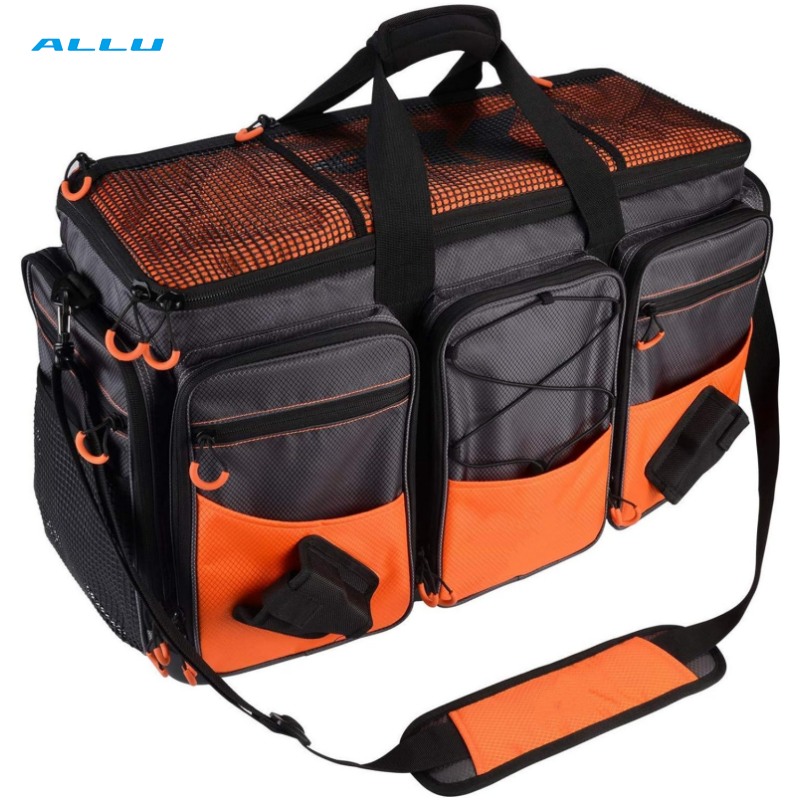
Waterproof fishing tackle backpack

Purpose-Built Design

The main difference lies in purpose. A regular backpack is designed for general use—school, work, travel, or hiking. It has compartments for books, clothes, and personal items but lacks features that address fishing needs.

An angler backpack, on the other hand, is tailored for fishing enthusiasts. It includes dedicated compartments for tackle boxes, fishing lines, pliers, hooks, and even rod holders. Many modern designs also feature a waterproof fishing tackle backpack style to protect gear from splashes, rain, or accidental drops near the water.


Storage and Organization

Organization is critical for anglers who need quick access to their gear. Regular backpacks often have a few main compartments and small pockets, which are not ideal for separating delicate fishing equipment.

By contrast, an angler backpack is built with:

  • Removable tackle trays to organize lures, hooks, and weights

  • Multiple specialized pockets for tools and accessories

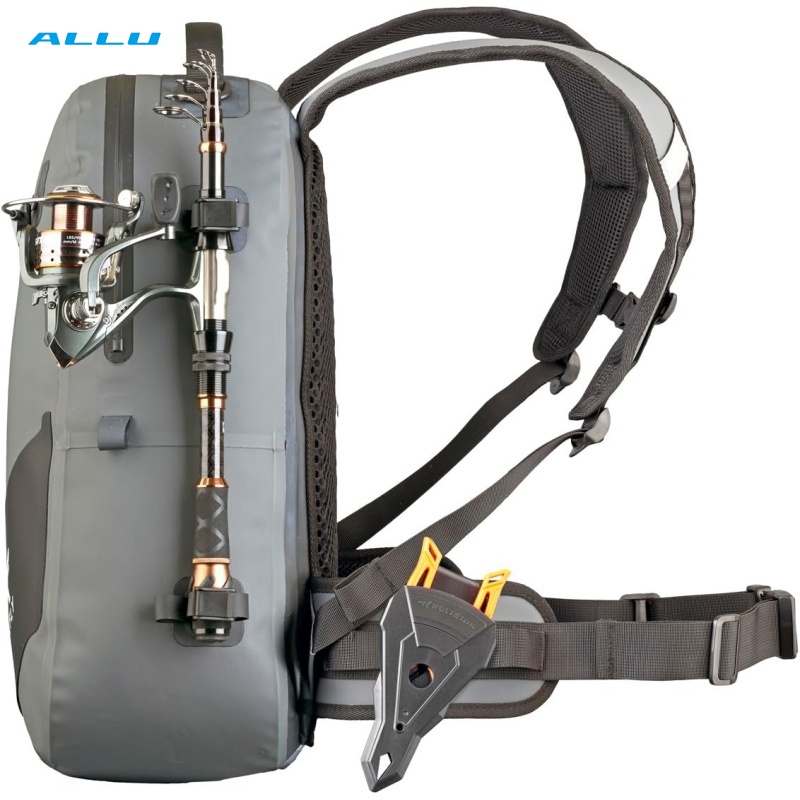
  • Rod holders and side straps for hands-free carrying

  • Insulated sections to keep bait or snacks fresh

For those who carry a lot of equipment, a large capacity angler backpack provides ample space without sacrificing comfort. This level of organization helps anglers stay efficient and focused while on the water.


Large capacity angler backpack

Comfort and Durability

Fishing trips can last hours or even days, often involving walking along riversides, trekking to remote spots, or standing on docks. A regular backpack may not provide the necessary support for carrying heavy gear over long distances.

Angler backpacks are designed with ergonomic features such as padded shoulder straps, breathable back panels, and adjustable chest or waist straps to distribute weight evenly. Materials are also more rugged—nylon, polyester, or waterproof coatings ensure the bag withstands outdoor conditions.


Weather Resistance

While some regular backpacks may resist light rain, most are not designed for constant exposure to water. Fishing, however, takes place in unpredictable environments.

That is why many fishing backpacks are water-resistant or fully waterproof. A best fishing gear backpack often comes with sealed zippers, waterproof compartments, and even rain covers to ensure gear remains dry and usable at all times.


Practical Features for Anglers

Angler backpacks often include practical extras that make fishing more enjoyable, such as:

  • LED light systems for night fishing

  • Hydration bladder compatibility for long trips

  • Tool attachment points for pliers, knives, or scissors

  • Hard shell sunglasses cases to protect eyewear

  • Non-slip bottom padding so the bag can rest on wet surfaces without damage

These specialized features make them highly functional compared to regular backpacks.


Why Choose an Angler Backpack?

The difference comes down to efficiency, protection, and convenience. While a regular backpack can carry supplies, an angler backpack is designed to make fishing easier and more productive. It organizes gear, keeps it safe from the elements, and ensures maximum comfort during long hours outdoors.

For casual trips, a simple backpack may suffice. But for dedicated anglers who want to save time and protect their investment in fishing gear, an angler backpack is the smarter choice.


An angler backpack is not just a storage bag—it is a specialized tool that enhances the fishing experience. Compared to a regular backpack, it offers superior organization, water resistance, durability, and comfort. Whether you are planning a short fishing trip or a multi-day adventure, choosing the right fishing backpack can make your outing smoother and more enjoyable.


What are the types of press brake tooling (bending machine molds )

Classification of commonly used press brake tooling:

There are several types of bending tools, including L-shaped, R-shaped, U-shaped, Z-shaped, etc. The upper punch mainly has different angles such as 90 °, 88 °, 45 °, 30 °, 20 °, and 15 °. There are double and single slots with different slot widths of 4-18V in the lower dies, as well as R lower mold, acute angle lower mold, flattening tool set, etc. press brake tooling punch and die are divided into sections and whole parts: the upper punch is generally divided into sections of 300mm, 200mm, 100mm, 100mm, 50mm, 40mm, 20mm, 15mm, 10mm, and the whole is 835mm. The lower die is generally divided into sections of 400mm, 200mm, 100mm, 50mm, 40mm, 20mm, 15mm, and 10mm, and the whole is 835mm.

Bending tools are made of steel that has undergone special heat treatment, and have the characteristics of high hardness, low wear, and high pressure resistance. However, each set of molds has its maximum pressure capacity: tons/meter. Therefore, when using the mold, the length of the mold should be selected, that is, how much pressure should be added per meter, and it must not exceed the pressure marked by the mold.

② In order to avoid damaging the mold, we have stipulated that when aligning the origin, upper and lower molds with a length of at least 300mm must be used to align the origin Only after aligning the origin can the upper and lower molds of the same height be used. It is strictly prohibited to use split molds for the origin, and the origin must be based on the internal origin pressure of the AMADA machine.

③ When using molds, due to the different heights of various molds, only molds of the same height can be used when selecting molds on a machine, and molds of different heights cannot be used.

④ When using molds, appropriate upper and lower molds should be selected based on the hardness, thickness, and length of the metal sheet material. Generally, the lower mold is used according to the standard of 5-6T, and the length should be longer than the sheet material. When the material is harder and thicker, a lower mold with a wider groove should be used.

⑤ When bending sharp angles or pressing dead angles, a 30 degree angle should be selected, with the sharp angle bent first and the edge pressed dead later. When bending the R angle, the R upper mold and R lower mold should be selected.

⑥ When bending longer workpieces, do not use segmented molds to reduce tool indentation, and choose single groove ones because the outer angle R of the V-groove of the lower mold of the single groove is large, which is not easy to produce bending indentation.

⑦ When selecting the upper mold, we should understand the parameters of all molds and decide which upper mold to use based on the shape of the product to be formed.

⑧ When bending products with extremely hard hardness or thick sheet metal, it is not allowed to use molds to bend steel bars or other cylindrical products.

⑨ When using molds, one should have a clear mind and lock the upper and lower molds after the machine has aligned with the origin. Do not let the molds fall off, injure people or damage the molds. During the operation, be careful not to apply too much pressure at once and pay attention to changes in the displayed data on the screen.

⑩ After using the tools, it should be promptly returned to the tools storage cabinets rack and placed according to the markings. The dust on the mold should be regularly cleaned and rust proof oil should be applied to prevent rusting and reduce the accuracy of the mold.

The schematic diagram of the shape of the upper punch type is mainly used for processing angles greater than or equal to 90 with a straight knife as shown in the following figure, and for processing angles greater than or equal to 90 with a curved knife as shown in the following figure. For processing angles greater than or equal to 30 with a sharp knife as shown in the following figure

The schematic diagram of the shape of the lower die type is mainly used. Note that the single V lower mold is shown in the following figure. 1. When the V-shaped angle is 86 (reference value), angles greater than or equal to 90 can be processed. 2. When the V-shaped angle is 30 (reference value), angles greater than 30 can be processed. The lower mold used for the quick bending machine is of this type. The double V lower mold is shown in the following figure. The lower mold used for AMADA bending machine is of this type

Segmentation of bending tools:

Under normal circumstances, the length of the tool is 835mm; to facilitate bending different lengths, the entire length of the tool is often divided into the following sections: 10+15+20+40+50+100+100+200+300=835

The correspondence between plate thickness and groove width:

Normally, the slot width is 6 times the thickness of the board. The comparison table of plate thickness and groove width currently specified by Wan Jiayuan is as follows: Material thickness (mm) 1.01.21.52.02.5 Bending machine lower die width (mm) 6681216

The minimum bendable size for processing according to the comparison table above (including plate thickness):

Plate thickness (mm) 1.01.21.52.0L minimum size for L-shaped bending (mm) 4.54.768.5Z minimum size for Z-shaped bending (mm) 77.4912


Conventional bending sequence:

1. Short side first and then long side: Generally speaking, when all four sides are bent, folding the short side first and then the long side is beneficial for the processing of the workpiece and the assembly of the bending mold

2. First the periphery and then the middle: Normally, it is folded from the periphery of the workpiece to the center of the workpiece

3. Partial first and then overall: If there are some structures inside or outside the workpiece that are different from other bends, it is generally necessary to bend these structures first and then bend other parts

4. Consider interference situations and arrange the bending sequence reasonably: The bending sequence is not fixed, and the processing sequence should be adjusted appropriately according to the shape of the bending or obstacles on the workpiece


The Ultimate Guide to Scaffolding Pipe Load Capacity Safety, Standards, and Structural Integrity

The structural soundness of temporary support systems is unarguably one of the most important factors to consider when working on large-scale construction and industrial infrastructure. Within every scaffolding system, there are pipes used for support. Knowing what size and weight capacity your scaffolding pipe will be able to safely hold is critical to providing safe work environments, maximising your material utilised on-site, and achieving compliance with the international engineering standards.

This guide outlines exactly what things are taken into consideration when determining how much weight each type/size of scaffold metal pipe can safely support, as well as what standards exist to govern the use of scaffolding pipes in all parts of the world.


1. The Fundamentals of Load Capacity


How much weight can be supported by the scaffolding pipe? The Load Capacity is found by determining how much load (force) a given scaffolding pipe can bear before it reaches its Limit-State of being permanently deformed or physically collapsing. In the professional Engineer aspect of your job, this value is always calculated in relation to all other pipes in a given scaffolding grid; this means you cannot just use this value by itself.

Dead Loads vs. Live Loads

  • Dead Loads: The self-weight of the scaffolding structure (i.e., the weight of the pipes, steel planking, steps, and couplings that make up the actual scaffolding).
  • Live Loads: The combined weight of all persons, equipment, and materials being stored on the scaffolding framework.


2. Key Determinants of Structural Strength


The load-bearing potential of a scaffold tube is dictated by several physical and mechanical properties.

A. Specification of Material and Thickness of Wall:

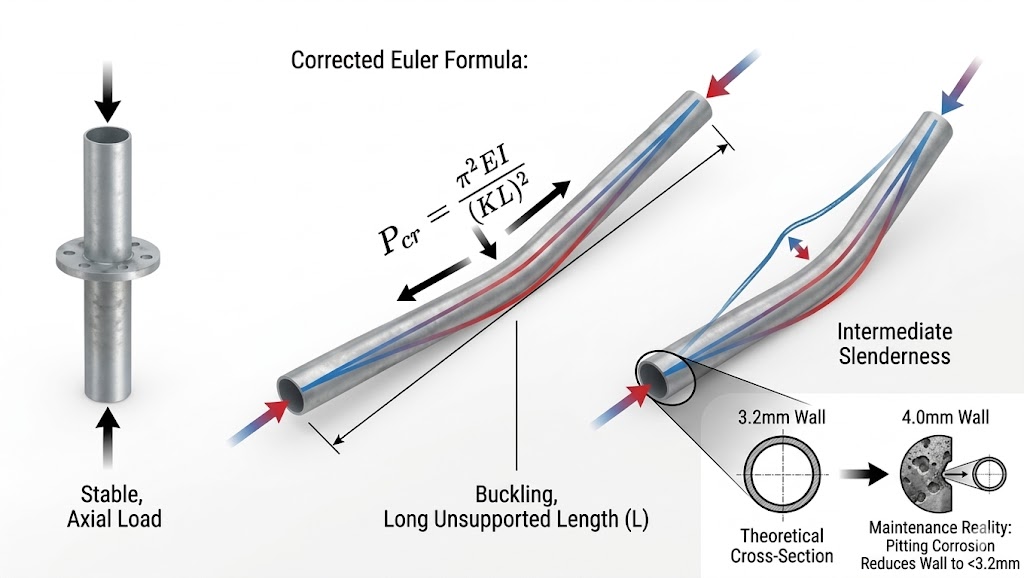
  • The material most often used for structural scaffolding is galvanised carbon steel, and the thickness of the wall (typically 3.2mm or 4.0mm) has a direct impact on how much bending moment the pipe can withstand. A thicker wall gives an increase in the cross-section of the pipe and therefore gives an increase to the axial load bearing capacity.

B. The Slenderness Ratio and Buckling:

  • As the unsupported length of a pipe increases, the strength of the pipe decreases due to being slender. This is referred to as the slenderness ratio in engineering. A pipe may be made from a strong material, but if the vertical lift height between the two horizontal ledgers is too great, the pipe could buckle when loaded to less than its theoretical crushing load.

C. Regulatory Standards: EN39 and BS1139

Compliance with international standards ensures consistency in performance.

  • Our commercial and technical stock includes conventional steel tubes to BS1139 / EN39. These are available in straight lengths and have a nominal outside diameter of 48.3mm with a diameter tolerance. The steel has a minimum specified yield strength of 235 N/mm2. The use of these components as a base for safe load calculations is a common starting point.


3. Load Classes and Duty Ratings


Scaffolding systems are classified based on their intended application. These classifications dictate the maximum Uniformly Distributed Load (UDL) allowed on the working platforms.


Load Class

Rated Capacity (UDL)

Application Profile

Class 1 (Extra Light)

0.75 kN/m2

Inspection and very light maintenance.

Class 3 (General Purpose)

2.00kN/m2

General construction and bricklaying.

Class 4 (Heavy Duty)

3.00kN/m2

Masonry, concrete work, and heavy loading.


4. Engineering Calculations for Load Capacity


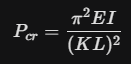
Calculating the critical load of a vertical scaffold standard (acting as a compression member) involves assessing Euler’s buckling formula.

The critical buckling load Pcr is expressed as:


Where:

E: Modulus of elasticity of the steel.

I: Second moment of area.

L: The actual length of the pipe.

K: The effective length factor (dependent on how the ends are secured).


The Safety Factor: To account for unpredictable variables such as wind oscillation or minor material defects, a safety factor (typically 4:1) is applied to the ultimate breaking load to determine the Safe Working Load (SWL).


5. Factors That Diminish Load Capacity


Theoretical capacity must be adjusted for real-world conditions. Over time, several factors can compromise the integrity of the steel:

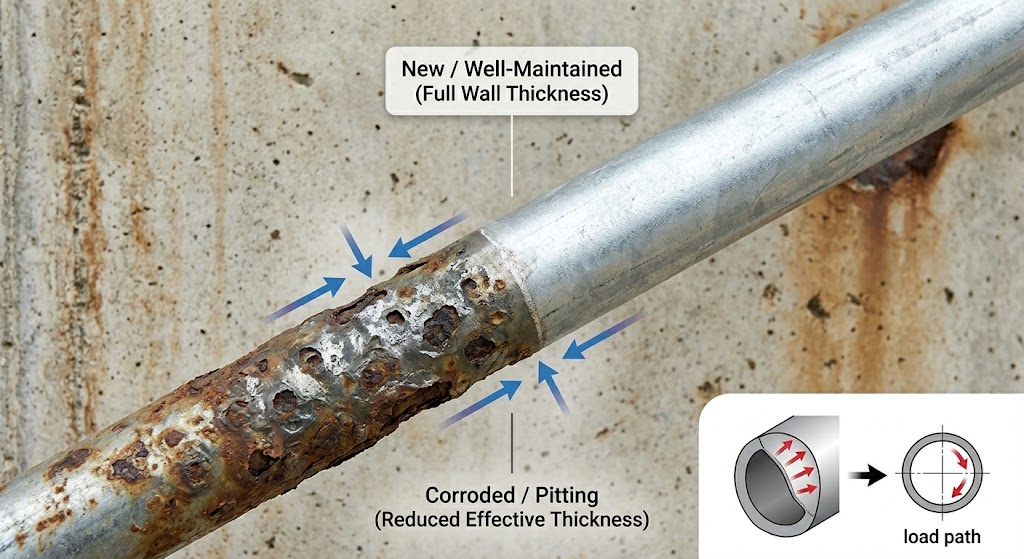
  • Corrosion/Oxidation: When deep rust is present on the pipe, the effective thickness can be greatly reduced to the point where, for both static and dynamic loads, the pipe's inertia can be dramatically decreased.
  • Eccentric Loading: An eccentric loading is defined as a loading where the center of loading is not directly above the center of the pipe. In this type of loading, there is an additional bending stress imposed on the pipe. This changes the point of failure from the hoop stress break point to the bending stress break point.
  • Physical deformation: Dents, bends, and 'straightened' pipes cannot be repaired and should be taken out of service as they will not have met the original performance criteria.


6. Practical Implementation for Site Safety


To maintain the highest standards of structural integrity, consider the following technical practices:

  • Uniformity of Materials: Avoid mixing tubes of different wall thicknesses (e.g., 3.2mm and 4.0mm) within the same vertical run to ensure predictable load distribution.
  • Rigid Coupling: Ensure all couplers are torqued to the manufacturer’s specifications, as the "fixity" of the joints affects the $K$ factor in buckling calculations.
  • Regular Verification: Conduct periodic thickness testing and straightness checks to ensure that the inventory still meets the original mill certificate specifications.


Conclusion


Determining scaffolding pipe load capacity is a balance of material science and mechanical engineering. By adhering to recognized standards like BS1139 and EN39, and factoring in variables like slenderness ratios and safety margins, construction projects can proceed with the highest level of structural confidence.

Safety in scaffolding is not a matter of guesswork—it is a matter of calculated precision.


Ensure your next project is built on a foundation of certified strength. We provide premium, high-strength scaffolding pipes and components that exceed international safety standards.

Contact us today to receive full technical specifications and mill certificates for your scaffolding requirements!


FAQ


1. What is the standard load capacity of a 48.3mm scaffold tube?

  • The load capacity of a standard 48.3mm outside diameter (O.D.) scaffold tube depends primarily on its wall thickness and its unsupported length. For a standard 4.0mm wall thickness steel pipe complying with EN39, the safe axial load is typically around 40 kN to 60 kN, provided the unsupported height (lift) is kept within standard limits (usually 2.0 meters). However, this value decreases significantly as the lift height increases due to buckling risks.


2. How does wall thickness (3.2mm vs. 4.0mm) affect load-bearing?

  • Wall thickness is a critical factor in structural stability. A 4.0mm pipe has approximately 20% more steel than a 3.2mm pipe. This extra material significantly improves the Radius of Gyration and the Moment of Inertia, making the 4.0mm pipe much more resistant to buckling. In heavy-duty applications or high-clearance structures, 4.0mm pipes are the industry preference to maintain a higher safety margin.


3. Can rusted or corroded pipes still meet load requirements?

  • Corrosion is a "capacity killer." Surface rust (flash rust) typically doesn't affect structural integrity, but pitting corrosion or internal scaling reduces the effective wall thickness. If a pipe’s wall thickness has decreased by more than 10% from its original specification, it should be downgraded or decommissioned, as it can no longer reliably meet the load capacities defined in standards like BS1139.

How to Choose the Right Industrial Blades 5 Key Factors to Extend Tool Life and Reduce Costs?

In the world of high-speed manufacturing, whether you are processing seafood, printing packaging, or recycling plastic, your blades are the heartbeat of your production line. A dull or incorrectly selected blade doesn't just produce poor-quality cuts—it causes machine downtime, increased waste, and skyrocketing maintenance costs. At Ma'anshan Guangchuan, we understand that the right blade is an investment in efficiency. In this guide, we share professional insights on how to choose the perfect blade for your application.


1. Match the Material to Your Application

The first step in blade selection is understanding the material being cut.

  • Food Processing: For products like shrimp deveining or meat dicing, stainless steel with high corrosion resistance is essential to meet food safety standards.

  • Abrasive Materials: When shredding waste or recycling rubber, tools require high-impact alloy steel or tungsten carbide to withstand extreme wear.

  • Paper & Film: Slitting applications require high-speed steel (HSS) to maintain a razor-sharp edge over millions of rotations.


2. Consider the Hardness (HRC) Balance

Hardness is a double-edged sword. While a harder blade (higher HRC) stays sharp longer, it also becomes more brittle.

  • High Hardness: Best for thin films and soft materials to ensure clean, burr-free edges.

  • Balanced Toughness: Essential for heavy-duty shearing or shredding where the blade must absorb impact without chipping.


3. Precision Matters: The Role of CNC Grinding

A blade is only as good as its finish. Using advanced CNC grinding machines, such as the MKP7140 used in our facility, ensures micron-level flatness and edge consistency. A smoother surface finish reduces friction and heat buildup, which are the primary enemies of blade longevity.


4. Geometry and Edge Angle

The "bevel" or angle of the blade edge significantly impacts performance.

  • Acute Angles: Provide the cleanest cuts but are more delicate.

  • Large Angles: Offer more support behind the edge, making them ideal for heavy-duty metal shearing or wood chipping.


5. Professional Packaging and Anti-Rust Protection

Often overlooked, how a blade is stored and shipped affects its initial performance. High-precision tools should arrive in reinforced, sea-worthy wooden crates with anti-rust oil application. At Guangchuan, we utilize heavy-duty wooden crate packaging to ensure your precision edges remain pristine during global transit.


Choosing the right industrial blade is a balance of material science, precision engineering, and application knowledge. By investing in quality tools, you reduce the "Total Cost of Ownership" by minimizing blade changes and maximizing output.

VFD System Module Guide Understanding the Roles of Siemens 6GK7342-5DA02-0XE0 and 6ES7153-4AA01-0XB0

In a VFD (Variable Frequency Drive) control system utilizing Siemens automation components, the modules 6GK7342-5DA02-0XE0 and 6ES7153-4AA01-0XB0 serve distinctly different functions, and whether they are both required depends entirely on your system architecture.


 Do You Need Both?

Typically, you do not need both modules simultaneously for a standard application, as they operate in different network domains and physical locations .

- 6GK7342-5DA02-0XE0 (CP 342-5): This is a Communications Processor (CP) designed for the S7-300 PLC rack. Its primary role is to connect the central PLC controller to a PROFIBUS DP network . In a VFD system, you would use this module if your drives are connected via PROFIBUS and you need the central PLC to master the network and exchange data with the drives .

- 6ES7153-4AA01-0XB0 (IM 153-4 PN): This is an Interface Module (IM) for an ET 200M distributed I/O station . Its role is to connect remote I/O modules (mounted on a separate sub-rack) back to the central PLC via a PROFINET network . You would use this if your VFD system requires local sensors/actuators to be wired to a remote cabinet away from the main PLC.


 Key Functions:

- CP 342-5 (PROFIBUS DP): Acts as the master or slave on a PROFIBUS network. It handles communication with drives, HMIs, or other field devices, offloading this task from the CPU .

- IM 153-4 PN (PROFINET IO): Acts as the gateway for an ET 200M remote I/O rack. It allows standard S7-300 I/O modules to be placed remotely and communicate with the controller over an industrial Ethernet (PROFINET) network .

6ES7 153-4AA01-0XB0

 Critical Usage Considerations

1.  Network Architecture: Do not confuse their purposes. A CP 342-5 is for the central controller rack; an IM 153-4 is for a remote I/O rack. Using them together would imply a complex system with both PROFIBUS drives and remote PROFINET I/O.

2.  Product Lifecycle: Note that the specific model 6ES7153-4AA01-0XB0 has been announced for discontinuation (as of October 2023) . Verify the current status or consider successors for new designs.

3.  Installation & Safety: Both modules are sensitive to electrostatic discharge . Ensure proper grounding of the mounting rail . Always disconnect power before installation and maintain adequate clearance (at least 40mm) around modules for ventilation .